
The Town Hall’s council chamber hosted an information session to present the project’s objectives, explain how the study will be carried out in the municipality and answer residents’ questions.
On Thursday, 22 October, Sant Joan de les Abadesses hosted an information session about Girostudi, a pioneering community-based public health research project promoted by the Diputació de Girona and the Generalitat de Catalunya. The town is one of 18 municipalities selected across the Girona region to take part in this ten-year study, which will examine how living conditions and the environment influence people’s health.
Local data to better understand health across the region
During the session, Narcís Pou, a technical specialist at Dipsalut, explained the importance of obtaining representative data from smaller municipalities, which are often underrepresented in health studies. Girostudi aims to provide a more comprehensive understanding of population health by considering physical, social, emotional and environmental factors.
This locally generated knowledge will help guide public policies tailored to the specific needs of the Girona region.
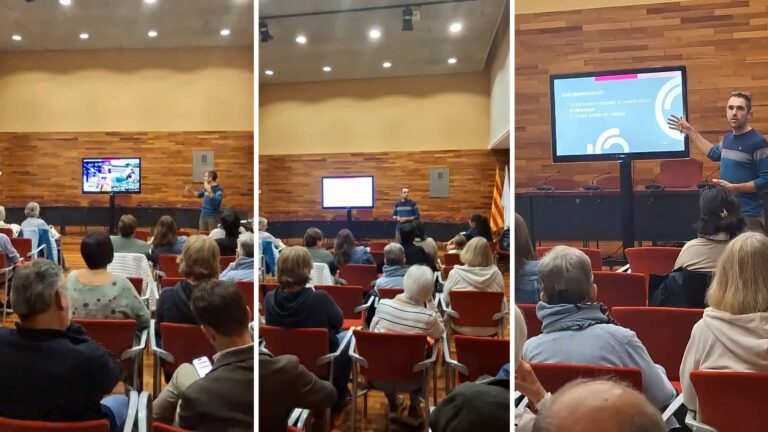
How does Girostudi work and how can residents participate?
The session also provided an opportunity to explain how participants are selected, how they are contacted by letter and telephone, and what the initial interviews and follow-up questionnaires throughout the study will involve.
The event helped attendees gain a better understanding of how the project works and clarified questions about participation.
If you receive an official letter or a phone call from the Girostudi fieldwork team, say yes! Your participation is essential to generating knowledge that can help improve health and well-being across the region.
Girostudi in the Ripollès media
The regional news outlet Ripollès Digital also covered the presentation, highlighting the importance of collecting representative health data from smaller municipalities. The article notes that Sant Joan de les Abadesses and Camprodon are the two municipalities in the Ripollès region participating in the project.